
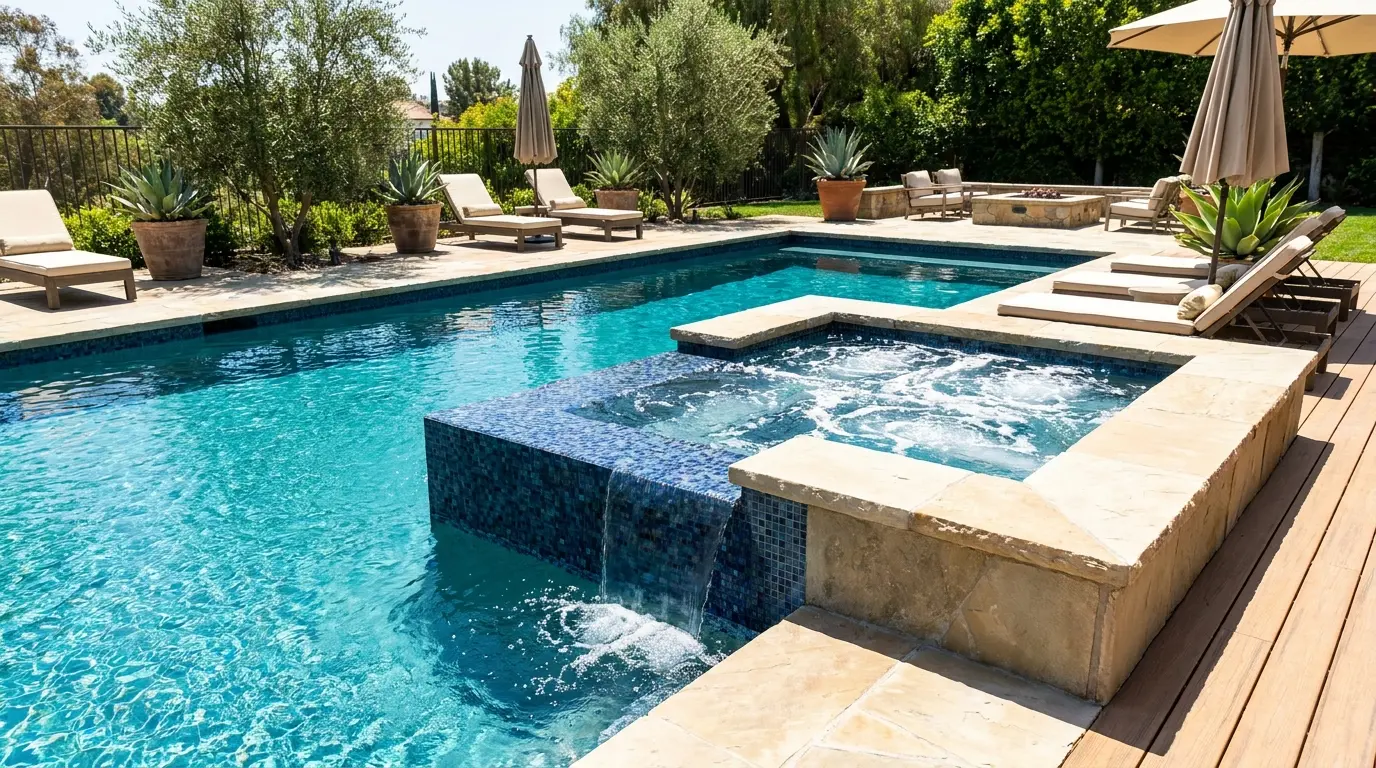
Spa Installation & Renovation in Los Angeles
Spa installation and renovation across Los Angeles. Raised, attached, or freestanding spas, engineered structure, jets, automation, and finishes coordinated with your existing pool.
Every job includes the following.
- Engineered structural drawings for raised or attached spas
- Permitting through LA County and city counter
- Plumbing, electrical, and bonding to current code
- Jet selection, blower placement, and spillway tuning
- Heater and pump matched to spa volume
- Tile and coping selection coordinated with the pool
Four steps. Written commitments at every step.
-
01
Free site visit
Steve or a senior tech walks the property, measures, photographs, and discusses scope with you in person.
-
02
Written quote
Itemized quote in 48 hours. No hidden line items, no upcharge surprises mid-job.
-
03
Schedule
Pick a start date that works for your household. We commit in writing and send a 24-hour reminder before each crew visit.
-
04
Execute & sign-off
Same W-2 crew start to finish. Daily photo updates. Final walk-through and warranty docs delivered before you pay the balance.
See the difference real spa installation & renovations makes.
A look at the kind of transformation our crew delivers on every spa installation & renovations job.
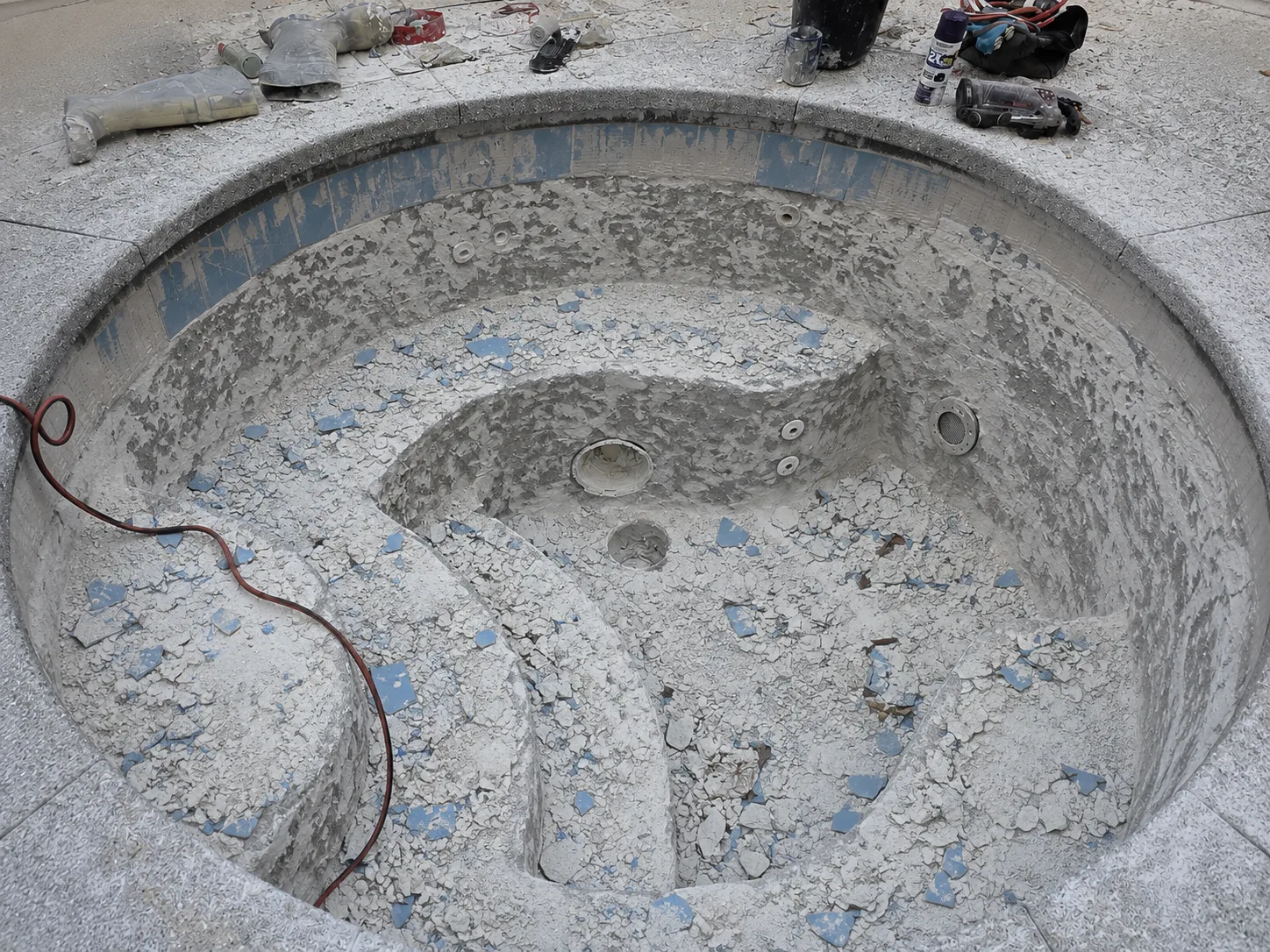 Before
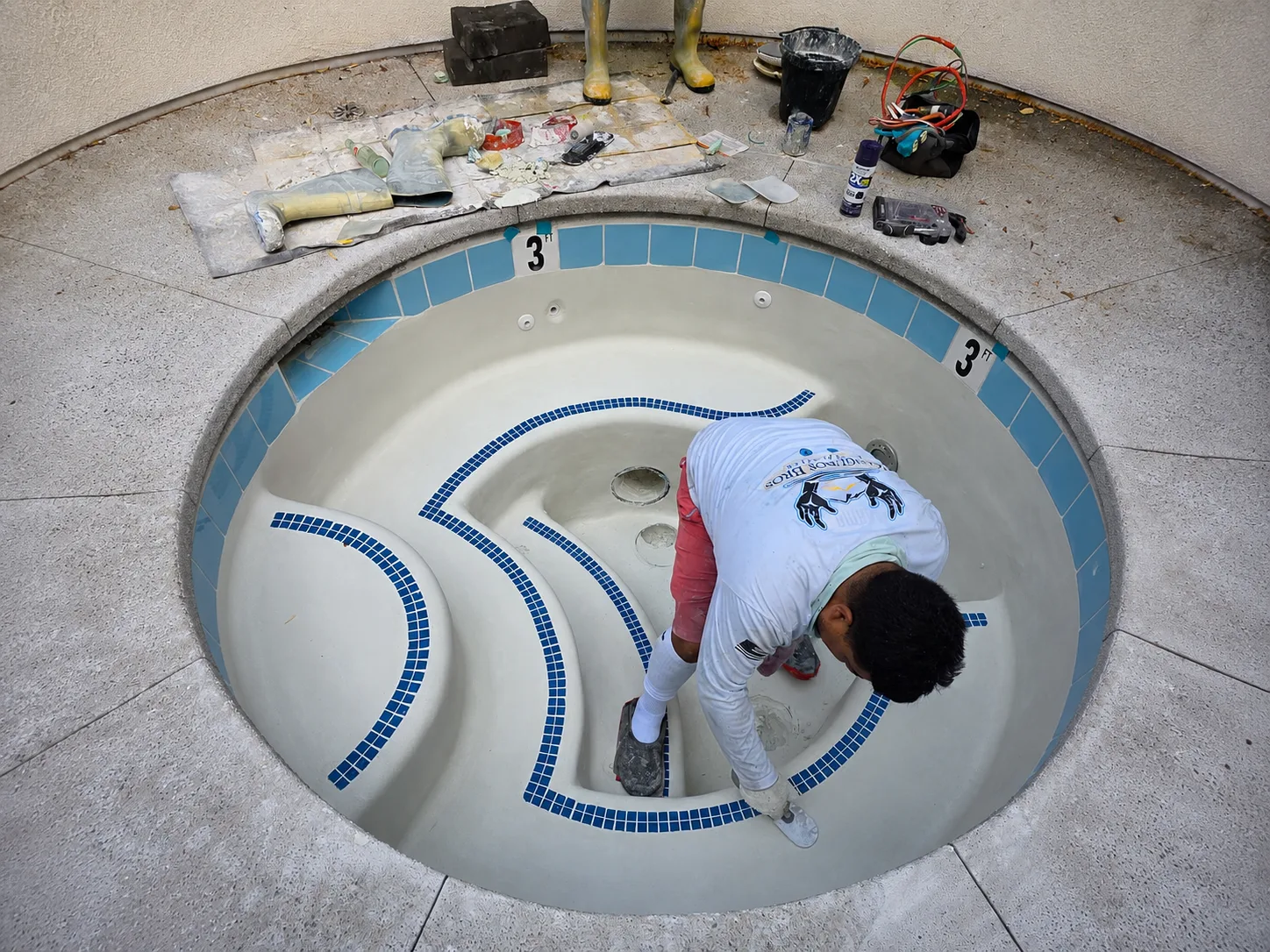 After
After
Final price depends on pool size, equipment, finish selection, and site access. We give you a written quote within 48 hours of the free site visit. No mid-job upcharges.
What customers ask before signing the contract.
Can you add a spa to my existing pool?
Usually yes. Attached spas use the existing pool deck and a shared equipment pad. We engineer the structural attachment and re-permit the electrical. Standalone spas are simpler still.
How long until I can use it?
Three to six weeks for a typical spa add-on. Standalone retrofits with modern jets can be done in two weeks.
Will it match the pool finish?
Yes. We coordinate plaster, tile, and coping across both spa and pool so the visual reads as one project, not a bolt-on.
How hot can the spa run, and is that adjustable?
Standard spa heaters reach 104°F, the code maximum for residential spas. Temperature is fully adjustable and typically controlled through the same automation system as the pool, so you set it from your phone before you walk outside.
Do I need a separate heater for the spa?
Not always. A properly sized pool heater with a spa-side valve setup can heat both, since a spa is a much smaller volume and heats fast. Larger properties or spas used independently of the pool sometimes get a dedicated heater for faster turnaround.
How many jets does a typical spa renovation include?
Most residential spas run 6 to 10 jets depending on seating capacity and blower size. We size the blower and plumbing to the jet count during design so pressure stays strong rather than weakening as more jets are added.
Can an old, dated spa be renovated instead of rebuilt?
Often yes if the structural shell is sound. Renovation typically means new jets, a new finish, updated plumbing, and current automation, all built onto the existing structure, which costs meaningfully less than a full rebuild.
Is a spillway or spillover into the pool required?
No, it is a design choice. Some homeowners prefer a spillway for the visual and sound; others prefer the spa to operate fully independent of the pool so it heats faster without warming pool water in the process. We will walk you through both.
What is the difference between a raised spa and an attached spa?
A raised spa sits above the pool deck level, often with a spillway edge, and reads as a distinct architectural feature. An attached spa sits at deck level directly beside the pool, sharing sightlines and usually plumbing. Raised spas cost more due to the additional structural wall.