The eight things that actually matter every week. Doing these in order takes thirty minutes and prevents almost every problem that ends in an emergency phone call.
Most pool problems are not surprises. They are slow drifts in chemistry, clogged baskets, and missed runtime that compound over weeks. Here is the checklist our crews run on every visit — homeowners can run the same one and save themselves a service call.
1. Skim the surface
Before anything else, get debris off the surface with a leaf rake. The longer leaves sit on the water, the more tannins they release and the harder your sanitizer has to work.
2. Empty the skimmer and pump baskets
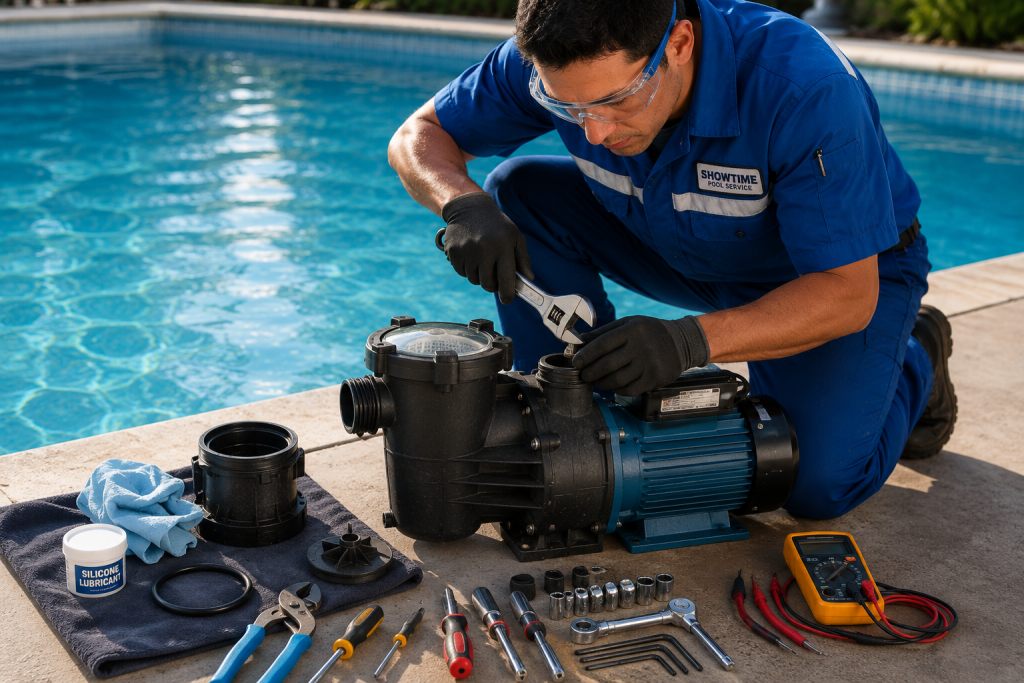
A full skimmer basket starves the pump of water. A full pump basket starves it more. Empty both. If the pump basket is more than half full at the weekly check, your skimmer’s not catching enough — investigate why.
3. Brush the walls and waterline
Two minutes with a nylon brush prevents algae from setting up shop. Pay extra attention to the waterline tile and the shadow side of the pool where sun hits least.
4. Vacuum the bottom (every other visit)
If you have a robot, run it. If you have a manual vacuum head, hook it up to the dedicated suction line and walk the bottom. Skipping vacuuming for three weeks straight is how a clean-looking pool turns into an algae outbreak overnight.
5. Test free chlorine, pH, total alkalinity
Use a drop kit, not test strips — strips drift. Free chlorine: 2 to 4 ppm. pH: 7.4 to 7.6. Total alkalinity: 80 to 120 ppm. If any of these is out, adjust before moving on.
6. Check the filter pressure
Note the pressure reading on the filter gauge. If it is more than 8 PSI above the clean-filter baseline, backwash (DE/sand) or hose down the cartridges. Filtering through a clogged filter wastes electricity and water.
7. Run the pump long enough
Rule of thumb: total pool volume should turn over once per day. For most LA backyard pools that is six to eight hours on a single-speed pump, or two to three hours on a variable-speed at high RPM plus longer at low. Cut runtime and you will see algae within a week.
8. Walk around the equipment pad
Listen for unusual noises. Look for water on the ground that should not be there. Check the heater’s exterior for soot or scorching. Five seconds at the pad catches problems three days before they become emergencies.